
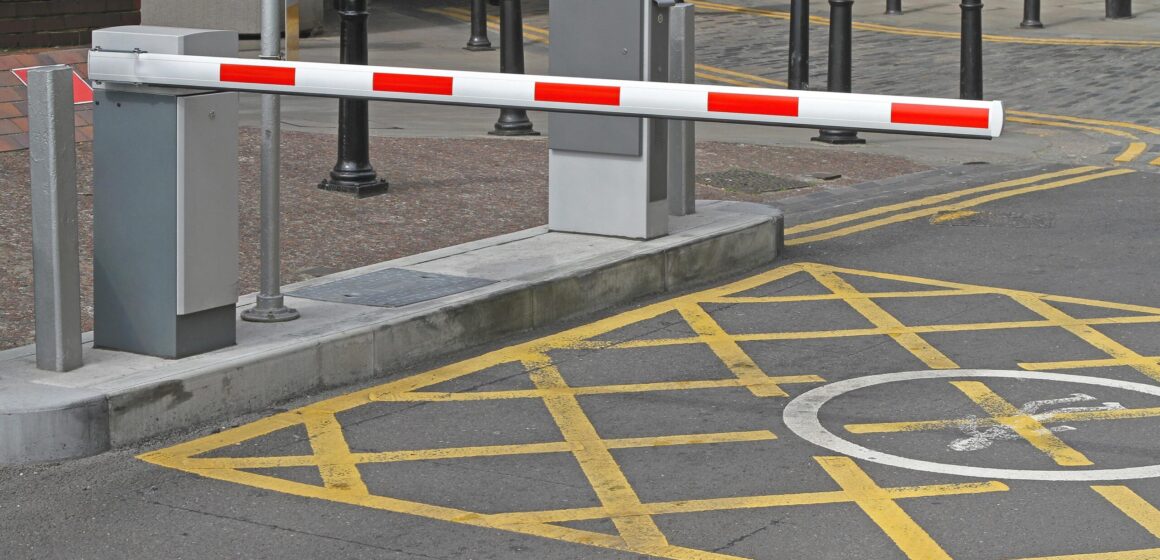
How Car Park Barriers Work To Enhance Security
At many sites across the UK, car park security no longer relies solely on a gate, a security guard, or isolated CCTV cameras. Today, car park barriers form part of a broader access control systems strategy, helping to manage entry and exit points, support parking management, restrict access to authorised vehicles, and maintain a more predictable flow of traffic in residential, commercial and industrial areas, as well as in parking facilities.
But discussing automatic barriers also means discussing operational safety. The HSE makes it clear that powered doors, gates and barriers intended primarily for vehicular use require adequate risk assessment, appropriate design measures, force limitation and ongoing maintenance, and that mere compliance with standards does not in itself eliminate all risks. In addition, car park barriers play a key role in site security by helping prevent unauthorised access and improving overall safety within parking facilities.
What are Car Park Barriers and Why Do They Matter For Safety?
Car park barriers are physical barriers installed at the entrance or exit of a car park to control vehicle access. The most common design is the barrier arm, or boom arm, which rises to allow passage and returns to the closed position once the vehicle has passed through. Ursa Gates provides this type of solution for car parks, residential complexes and commercial premises, with automatic and manual versions depending on the level of traffic and the type of operation at the site.
There are different types of car park barrier systems, including manual arms, automatic barriers, height restriction barriers, horizontal swing gates and ANPR systems, each designed to suit specific operational requirements and traffic conditions. Car park barriers can therefore range from simple manual barriers for low-traffic sites to more sophisticated automated systems used in high-volume commercial car parks and other parking facilities.
The value of these barriers goes far beyond simply opening and closing. When properly specified, they help restrict access, reduce the risk of unauthorised entry, discourage misuse of the space, and ensure only authorised vehicles use designated areas, making it clearer where the driver should stop, identify themselves and await authorisation.
In busy locations, this improves the clarity of the environment. The entry point is clearly visible, vehicle flow tends to be more organised, and internal traffic becomes more predictable. Automatic barriers are an investment in traffic flow, vehicle access control, traffic management and enhanced security for residential, commercial and industrial environments.
This approach is fully in line with HSE guidance on workplace transport. The recommendation is to separate vehicles and pedestrians wherever possible, protect those working near traffic routes, and clearly signpost traffic areas. Therefore, a well-integrated car park barrier should not be viewed as a standalone element, but as part of the safe design of site access.
How Car Park Barriers Work in Practice
The barrier combines a physical obstacle with a control system capable of determining when to allow or block passage. In a typical setup, the vehicle approaches, sensors detect its presence, and the system checks for authorisation. If everything is in order, the control unit activates the mechanism to raise the barrier arm so the driver can gain access to the car park, ensuring smooth and controlled vehicle access within the site.
Once the vehicle has passed, the system confirms that the area is clear and the barrier returns to the closed position. This process may seem simple to the user, but it relies on several components working together, including the barrier itself, the control unit, the motor, identification devices and safety sensors.
Most automatic car park barriers include obstacle detection technology designed to stop and reverse the barrier arm if resistance is detected while closing, improving operational safety and reducing safety risks within car parks.
Ursa’s automatic barriers are solutions featuring automatic opening and closing, integrated safety sensors and remote control capability. With regard to access control systems, readers, credentials, controllers and management software are what enable entry to be granted or denied based on user validation.
In practical operation, this means the system can work with a fob, card, keypad, remote control, intercom or automatic number plate recognition (ANPR). In more advanced car park environments, it can also be linked to ticket machines, management platforms and entry and exit logs. The result is a fast process for authorised vehicles and a more controlled one for visitors, suppliers or unauthorised drivers.
Automatic Car Park barriers vs Manual Car Park Barriers
Not all locations require the same type of solution. Rising arm barriers are the most common type of car park barrier, featuring an aluminium arm that lifts vertically. Automatic car park barriers, including rising arm barriers, are best suited where there is a high volume of vehicles, a need for a rapid response, integration with other systems, or a requirement for more rigorous registration and control. These systems operate using electricity and can be integrated with access control systems, making them ideal for high-traffic commercial facilities such as car parks that require efficient traffic flow, reliable vehicle access and seamless integration with wider parking management systems, as well as residential complexes and commercial premises that demand smooth, repetitive and efficient operation.
Ursa offers electromechanical traffic barriers with a 100% duty cycle, opening widths between 3 and 9 metres, and battery backup so that, in the event of a power failure, the barrier can be programmed to open automatically.
Manual car park barriers still have an important role in lower-demand environments where simpler access control is sufficient and traffic flow is limited. Boom barriers are a simpler and more economical option, manually controlled and suitable for low-traffic areas. They can be locked into open and closed positions and are operated by authorised personnel using a key or crank handle. These systems are commonly used on construction sites and at temporary road closures where automated systems are not required or practical.
In other words, manual barriers work well where traffic flow is low, the budget is tighter or use is occasional, but they do not offer the same level of convenience, speed and integration as automatic car park barriers. Therefore, the choice should not be based solely on the initial cost.
In many car parks, the key consideration is not whether the barrier opens and closes, but whether the system can keep pace with actual traffic flow, reduce queues, control access, and operate without constant human intervention. In busier environments, automatic barriers tend to perform better because they are designed for repeatability, consistency and integration with access control devices.
The Technologies That Make the Barrier More Effective
A modern car park barrier rarely operates on its own. What makes it truly effective is its integration with technologies that speed up validation and make operation safer. Among the most common features are card readers, RFID fobs, PIN keypads, intercoms, remote controls and ANPR systems, which support automated entry, improved vehicle access control, and enhanced parking management in modern car parks.
It is very important to choose the right activation method, such as remote control, access cards, ANPR or keypads, according to the site’s profile. In the case of ANPR, the British Parking Association explains that cameras installed at the car park’s entrance and exit capture time-stamped images of the vehicle and its number plate, enabling the duration of the stay to be calculated.
This is particularly useful in car park management, pay-and-display systems, time-limited car parks, or in locations that need to cross-reference number plates with a database of authorised vehicles. ANPR technology enables automatic recognition of number plates to grant or deny access, providing a secure and efficient solution for vehicle access control systems in car parks.
However, ANPR also introduces a significant layer of responsibility. The ICO states that, in many circumstances, the vehicle registration mark (VRM) constitutes personal data. As a result, operators must carry out a DPIA prior to implementation, limit data collection to what is necessary, maintain accurate databases, define proportionate retention periods, and ensure clear signage is in place for drivers.
Most commercial systems are also connected to a management system that tracks occupancy and integrates with payment kiosks, further improving operational efficiency in modern parking environments.
How Car Park Barriers Genuinely Enhance Security
The main benefit is control. When a site has a barrier, access is no longer unrestricted but becomes conditional. This reduces unauthorised parking, discourages opportunistic entry and creates a clear decision point for the system: who can enter, at what time, by what method and with what record.
Car park barriers offer a range of benefits, including improved reliability, durability and enhanced security across residential, commercial and industrial sites. The automatic barrier is a solution for controlling vehicle access, improving traffic flow, and supporting parking management, helping to create a more structured and secure environment in modern car parks and parking facilities.
Without physical control, many car parks are vulnerable to misuse, such as unauthorised use by non-residents, occupation by customers of other establishments, blocking of private areas and repeated unauthorised access. A barrier linked to access control systems helps address these risks by ensuring that only authorised vehicles can enter and operate within the site.
When an authorised vehicle approaches, the credential is verified, passage is granted and the system returns to its secure position once the vehicle has passed. This repeatable cycle reduces unpredictability and helps maintain a more organised site environment. In addition, security is not only about restricting access, but also about reducing safety risks within the site itself.
The HSE recommends appropriate separation, signage and protection for vehicles and pedestrians. As such, barriers help to reduce approach speeds, highlight key entry points and regulate vehicle movement, benefiting both drivers and pedestrians in car parks, industrial sites and mixed-use areas.
What to Consider Before Installation in the UK
Before installing a barrier, the most important step is to assess the actual site. The HSE states that the person responsible for the design, installation and commissioning of powered gates and barriers must ensure that the product is safe, and emphasises the need for a risk assessment that takes into account the environment and the type of user.
This means considering the width of the lane, traffic volume, the presence of pedestrians, approach speed, visibility, vehicle types, the need for emergency access and fail-safe logic. It is also important to consider expected day-to-day performance, as different environments require different levels of system resilience and control.
A residential car park operates differently from a commercial car park with frequent entries and exits throughout the day. An industrial environment may require more robust automatic barriers, integration with additional security measures, or a combination with vehicle barriers, bollards and perimeter protection systems to ensure effective site security and controlled access.
Ursa operates within this product ecosystem, including traffic barriers, access control, bollards and parking systems, helping to deliver a coherent solution rather than an isolated component. In some cases, systems may also include ANPR or CCTV integration, which introduces additional considerations around transparency and data handling.
The ICO recommends that signage be visible and legible, clearly identifying the organisation responsible, the purpose of the system and relevant contact details. This is particularly important for drivers approaching the system, as information must be easily understood within a limited viewing time, especially in areas accessible to vehicles.
Why Choose Ursa Gates
Choosing the right supplier is just as important as choosing the right equipment. Ursa Gates has over 25 years’ experience in installing automatic systems and car park barriers for vehicles and pedestrians across the UK and the Republic of Ireland, with full project management from design to completion, along with a 12-month warranty and maintenance contracts. The company also brings proven expertise in parking management and vehicular access solutions.
All of this is relevant to barrier projects, because the success of an installation depends on correct specification, integration with the wider access system, and ongoing maintenance throughout the product’s lifecycle. Another strength is the breadth of the offering. Rather than treating the barrier as a standalone product, Ursa works with a range that includes automatic barriers, manual barriers, boom arm barriers, access control, bollards and parking systems.
This is important because not all security or traffic challenges can be solved with a single configuration. Some sites require rapid vehicle control, others focus on better separation between vehicles and pedestrians, while others require a combination of barriers, access control systems and perimeter protection.
Choosing a company like Ursa Gates makes sense when the objective is not simply to install a barrier, but to implement a fully integrated system that delivers access control, operational security, efficient traffic flow and suitability for the UK environment.
Summary
Car park barriers improve security within parking facilities by transforming unrestricted access into controlled access. When integrated with access control devices, safety sensors, ANPR or other systems, they help prevent unauthorised entry, manage traffic flow, protect private areas and make vehicle movement safer in residential, commercial and industrial environments.
In the UK, this benefit is even more significant because installation and operation must take into account site-specific security requirements, pedestrian movement and, where number plate recognition is used, data transparency and protection obligations. A well-specified and properly installed solution delivers much more than convenience: it delivers control, predictability and enhanced security.


