How Do Electric Sliding Gates Work? A Comprehensive Guide to Features, Benefits, and Costs
Electric sliding gates are no longer seen merely as a luxury item and have become a practical solution within the UK market for modern access control systems. For residential properties, they allow effective access control without sacrificing valuable entrance space. For commercial and industrial environments, they provide a strong combination of security, smooth traffic flow, and reliable day-to-day operation in both residential and commercial properties.
Sliding gates are particularly useful where swing gates are impractical, especially in locations with limited space or projects requiring a more dependable automatic gate system. Modern gate systems also incorporate improved safety features and electronic components, enhancing both user protection and operational reliability.
In this guide, we explain how electric sliding gates work, the key features that matter in everyday use, the benefits they offer, and the costs involved in installation and maintenance.
How Do Electric Sliding Gates Work?
A standard electric sliding gate system consists of several key components, including a gate motor, control panel, guidance system, safety devices, and access control system.
The gate moves sideways rather than opening inwards or outwards like swing gates. This movement is driven by a sliding gate motor and coordinated by a control panel, which receives the opening command, processes system signals, and manages the gate’s movement from start to finish. Electric sliding gates operate using a combination of mechanical, electrical, and electronic systems, allowing controlled and reliable automation along a ground track or cantilever system for smooth gate movement and consistent operation. making them ideal for entrances with limited space.
The opening process is triggered via remote control, keypad, intercom, tag, or another access control system. The control panel then authorises the operation and activates the gate motor. In many installations, the motor works in conjunction with a toothed rack fixed to the gate, ensuring smooth and continuous movement. Alternative drive systems, such as chain-driven mechanisms, may also be used depending on the design requirements.
Key components such as rollers, guide elements, and limit switches ensure stability and precision throughout operation. Rollers and guides maintain alignment along the track, while limit switches define the fully open and fully closed positions, signalling the system to stop motor operation when required.
This process must be highly precise, as reliable performance depends on both the automatic gate system and the mechanical structure. In a well-designed installation, electric sliding gates may also include features such as partial opening for pedestrian access, controlled deceleration at the end of travel, obstacle detection, and manual override options for emergencies.
Safety is a fundamental part of the automatic gate system, especially in modern gate automation used in the UK. Infrared photocells and other sensors detect obstructions and can stop or reverse gate movement to prevent accidents. When all components are integrated correctly, the system ensures consistent operation, safe movement, and effective access control.
Ultimately, electric sliding gates are most effective when designed as a complete system, combining motor, control panel, sensors, structure, and access control. This ensures secure operation, resistance to forced entry, and suitability for both residential and commercial environments where reliability and space efficiency are essential.
Tracked Sliding Gates and Cantilever Sliding Gates: What is the Difference?
Within the category of electric sliding gates, the two most common systems are tracked sliding gates and cantilever sliding gates. While both serve the same primary function, they differ significantly in terms of installation, maintenance, cost, and suitability for different site conditions.
Tracked sliding gates operate by running along a ground track, using grooved wheels that guide and support the weight of the gate. This makes them a highly stable solution for wide entrances and heavier gates. When correctly installed and properly maintained, the system delivers smooth and reliable performance, which is why it is commonly used in residential driveways and commercial properties with frequent use.
However, tracked systems require precise installation and regular upkeep. Dirt, leaves, gravel, mud, or ice can obstruct the track and affect performance, making them less suitable for environments where ground conditions are difficult to control.
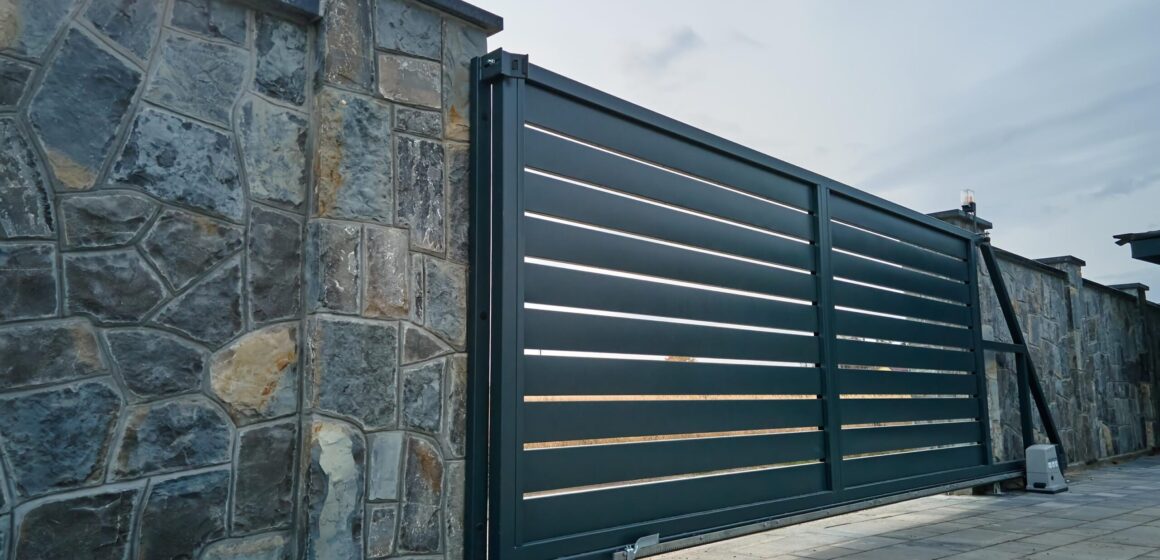
Cantilever sliding gates, by contrast, do not rely on a ground track. Instead, the gate is supported by a counterbalanced cantilever system, allowing it to slide above the ground without direct contact along its main span.
This makes cantilever gates particularly suitable for uneven ground, sloped driveways, or locations where installing and maintaining a ground track would be impractical. They are also more resilient in environments affected by rain, debris, or seasonal wear, which is especially relevant in the UK.
In addition, cantilever systems can accommodate larger spans—often up to around 12 metres in a single configuration, or up to 24 metres when paired systems are used. However, they require more lateral space for the counterbalance section and a more robust structural design, which can increase installation complexity and cost.
From a space efficiency perspective, sliding gates also offer a key advantage over swing gates, as they do not require a swing radius. This makes them a practical solution for short driveways, sloped entrances, or sites where space optimisation is essential.
Overall, the choice between tracked sliding gates and cantilever sliding gates depends on ground conditions, available space, and maintenance expectations. Each system offers distinct advantages, and the most suitable option will depend on the specific requirements of the property.
Features and Safety Features that Really Matter
When it comes to gate automation, many people focus too much on the motor and overlook safety. This is a critical mistake, particularly in the UK, where the Health and Safety Executive (HSE) classifies powered gates as machinery and sets clear requirements for compliance. These include the provision of full documentation such as User Instructions, a Declaration of Conformity, and appropriate conformity marking.
The HSE also requires that automatic gate systems are installed and maintained by competent contractors and inspected regularly, especially in workplaces, private roads, and residential developments managed by landlords or managing agents.
For this reason, safety features are not optional. A properly designed automatic gate system must include obstacle detection, photoelectric sensors, and automatic stopping or reversing when resistance is detected. These functions ensure that the gate responds safely to obstructions and reduces the risk of accidents during operation.
Safety edges installed on the leading edges of the gate further enhance protection by reducing the risk of crushing or impact during movement. Together, these features ensure both operational safety and regulatory compliance, while also increasing confidence for property owners and facility managers.
Another essential consideration is the power supply. In the event of a power failure, the system must not rely on uninterrupted mains electricity. Most installations therefore include a backup battery or manual override system, allowing the gate to be operated safely during outages. For sites where continuous access is critical, this should be considered a core design requirement rather than an optional feature.
Benefits of Electric Sliding Gates For Residential and Commercial Properties
The most obvious benefit of electric sliding gates is the efficient use of space. As the gate slides sideways, there is no need for the swing area required by traditional swing gates. This improves entrance usability, reduces conflicts with parked vehicles, and allows for smoother access in properties where space is limited.
This space efficiency is one of the key advantages of sliding gate systems, but the benefits extend far beyond layout optimisation. In residential properties, electric sliding gates enhance privacy, improve access control, and can increase the perceived value of the property, making them a strong long-term investment, particularly when the design complements the overall property architecture.
In commercial and industrial environments, the advantages are even more pronounced. Factors such as traffic flow management, timed access control, and integration with intercoms, keypads, tags, or other access control systems play a critical role in daily operations. As a result, sliding gates are widely used in private estates, business premises, and high-traffic facilities.
Another important factor is durability and performance. When correctly specified, these systems are designed to handle larger gate structures and frequent daily operation. This makes them particularly suitable for commercial properties and government facilities, where reliability and consistent performance are essential. A well-designed system ensures secure access control, reduces operational issues, and maintains efficient movement in and out of the site.
Installation and Maintenance of Electric Sliding Gates
Proper installation is essential to ensure the safe and reliable operation of an automatic gate system. Whether choosing tracked sliding gates or cantilever sliding gates, professional installation ensures the system is correctly specified, installed, and configured for the specific conditions of the site.
The process typically begins with a site assessment, where factors such as available space, ground conditions, and security requirements are evaluated to determine the most suitable gate system. This step is critical in ensuring the correct balance between performance, durability, and long-term maintenance requirements.
Once the system has been selected, installation involves preparing the site accordingly. For tracked sliding gates, this includes laying and aligning the ground track, while cantilever systems require sufficient lateral space and structural support. The gate is then assembled and installed with careful attention to alignment, integration of the sliding gate motor, and secure mounting of all structural components. Electrical connections link the control panel, safety devices, and access control systems to ensure coordinated and safe operation.
After installation, regular maintenance is essential to maintain performance and reliability. This includes lubricating moving components, inspecting safety devices such as photocells and safety edges, and checking for signs of wear, misalignment, or damage. Routine servicing helps prevent faults, reduces the risk of failure, and extends the lifespan of the system.
With correct installation and ongoing maintenance, electric sliding gates provide long-term reliability, efficient operation, and consistent security performance. A well-maintained system ensures smooth access control, reduces downtime, and supports both residential and commercial usage requirements.
Troubleshooting and Repair of Electric Sliding Gates
Even with proper installation and regular maintenance, electric sliding gates may occasionally develop faults that affect performance. Common issues include unresponsive remote controls, blocked or dirty photocells, and worn or misaligned limit switches, all of which can impact safe and reliable operation in both residential and commercial properties.
When diagnosing a fault, it is important to begin with basic system checks. This includes verifying that the power supply is active, reviewing the control panel for error indications, and ensuring that all safety devices are functioning correctly. In some cases, physical obstructions along the track or issues within a cantilever system may also prevent normal operation.
If the issue persists after these initial checks, it is recommended to contact a qualified technician experienced in electric sliding gate systems. Professional servicing allows for accurate diagnosis of more complex faults, such as motor failure or control panel malfunction, and ensures that repairs are carried out safely and effectively.
Timely repair and ongoing maintenance are essential to prevent more serious failures and reduce system downtime. Addressing issues early helps maintain operational safety, protects system components, and ensures long-term reliability of the gate installation.
Regulations and Points to Note in the UK
In the UK, one of the most common questions is whether planning permission is required. In many cases, it is not. The Planning Portal states that, as a general rule, permission is not required if the gate is no more than 1 metre high when situated next to a motorway, or 2 metres high in other locations, provided there are no additional factors such as a listed building, the curtilage of a listed building, or specific restrictions already in place for the site.
This means that the context of the site matters just as much as the height of the gate. However, there is also the issue of product and installation compliance. Current guidance from GOV.UK on the Supply of Machinery Regulations makes it clear that the legislation requires compliance with essential health and safety requirements, the completion of appropriate conformity assessment procedures, the issuance of a declaration of conformity, and the affixing of the relevant conformity marking.
The same guidance states that, following the regulatory change that came into force on 1 October 2024, the CE marking remains recognised indefinitely, alongside the UKCA regime where applicable. This shows that the issue of compliance has not gone away; it has simply become more specific and more technical.
Why Choose URSA Gates
The company is a supplier of vehicle access systems, including sliding gates, swing gates, traffic barriers and other access control solutions. URSA has over 25 years’ experience in installing automated systems for vehicles and pedestrians in the UK and the Republic of Ireland, offering comprehensive project management, an initial 12-month warranty, warranty extension options and maintenance contracts.
URSA Gates is a company that treats the gate as part of a larger system, rather than as a standalone product. This is an important point, because a good gate automation project does not depend solely on the gate leaf or the motor.
It depends on a site survey, the correct choice between tracked sliding gates and cantilever sliding gates, integration with access control, compliance with safety standards, and a maintenance plan that ensures long-term performance. It is this holistic approach that tends to deliver safer, more stable results that are better suited to the security needs of each property.
Summary
Electric sliding gates are a robust solution for those who require security, convenience, and efficient use of space. Automatic sliding gates operate through a coordinated setup that ensures reliability and safety in daily use. Modern gate systems typically include a gate motor, control panel, guidance system, and safety sensors, allowing them to be configured for different levels of access control and daily usage requirements.
Tracked sliding gates and cantilever sliding gates are designed for different site conditions, and the correct choice depends on factors such as available space, ground conditions, traffic volume, and durability requirements. In the UK, safety and compliance are also essential considerations, as the HSE classifies powered gates as machinery and requires strict standards for installation, maintenance, documentation, and inspection.
Costs can vary significantly depending on specification, materials, and automation level. While electric sliding gates may require a higher initial investment, they should be considered a long-term solution that delivers value through durability, reliability, and improved site security, rather than simply an upfront purchase.