Turnstiles vs Speed Gates: Which Access Control Option Is Best?
Choosing between turnstiles and swing gates may seem straightforward at first, but the real requirements of a building quickly make the decision more complex. Security, pedestrian flow, the look and feel of the reception area, accessibility, and integration with access control systems can all significantly influence the final choice.
Rather than asking which system is best in absolute terms, the more relevant question is which solution delivers the right level of controlled access for the specific environment, without creating unnecessary friction for users or operational inefficiencies. Both options fall under modern access control systems, but they are designed to serve distinct operational needs depending on the site layout, security requirements, and expected traffic flow.
What are Turnstiles?
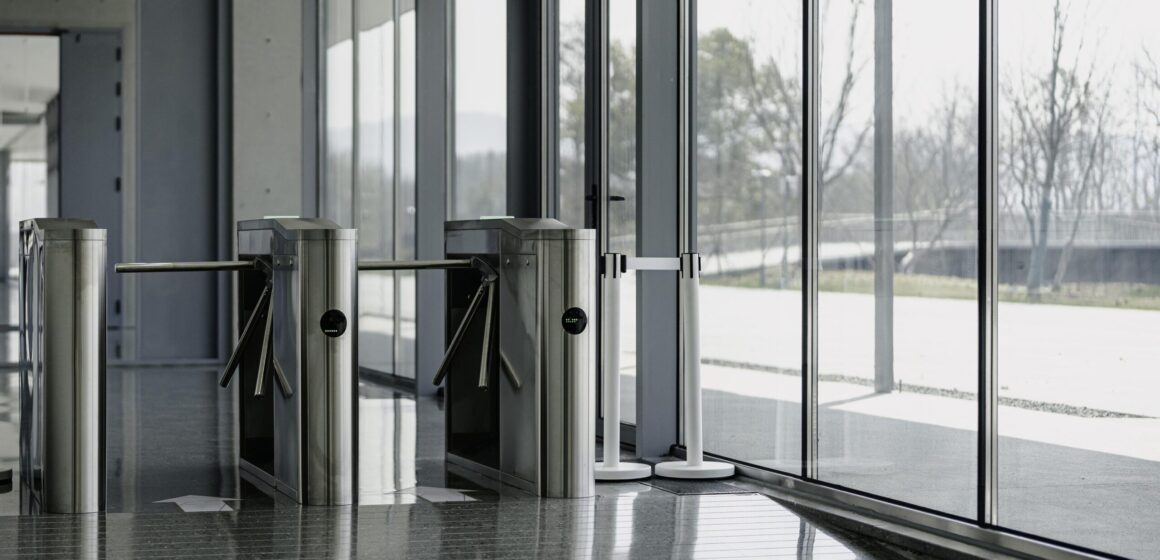
Turnstiles are access control solutions designed to manage pedestrian flow in a physical and visible manner. This category includes different types of turnstiles, ranging from tripod turnstiles with traditional waist-high rotating arms, to full-height turnstiles designed for environments where maximum physical security and controlled access systems are the priority.
The key advantage of turnstiles lies in their stricter control of access. The structure creates a clear physical barrier, supports crowd control, and helps prevent unauthorised access, particularly in environments where containment is an important part of the overall security strategy.
Ursa Gates provides a range of turnstile solutions, including outdoor turnstiles for harsh environments, boxed turnstiles for compact indoor installations, and tripod turnstiles for areas with high pedestrian flow. This approach is suited to environments where controlling movement is as important as user authentication and system integration.
In industrial facilities, sports venues, external perimeters, technical areas and selected transport hubs, the combination of physical barrier, individual passage control and mechanical durability remains highly relevant. As a result, turnstiles continue to be a strong choice where access needs to be more restricted, clearly defined, and less dependent on a seamless user experience.
What are Speed Gates?
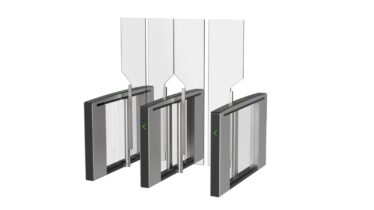
Speed gates represent a more elegant and faster evolution of modern access control systems, designed to support efficient access control in high throughput environments. Instead of rotating arms, they typically use glass barriers or motorised panels that open and close in a fraction of a second following validation via card, QR code, biometrics or other authentication methods.
Speed gates are particularly effective in environments where both security and efficient pedestrian flow are essential, especially in high-end settings that require a modern architectural aesthetic and a strong focus on user experience.
Within the Ursa Gates ecosystem, they provide secure access and entry control with a smooth flow, featuring separate lanes and a clear emphasis on efficiency, design, and operational performance. This is why speed gates are commonly installed in corporate offices, corporate headquarters, premium reception areas, and commercial buildings where first impressions and visitor experience play a key role.
They offer a balanced level of security combined with advanced sensing technology and integration with modern access control systems, including biometric systems and building management platforms. This allows organisations to manage access efficiently while maintaining a seamless and controlled entry experience.
In many installations, speed gates can achieve higher pedestrian throughput compared to traditional turnstiles, making them suitable for high traffic environments where operational efficiency and smooth flow are priorities. At the same time, their design reduces visual bulk, creating a more open and welcoming entrance environment for staff and visitors.
Turnstiles vs Speed Gates: The Main Differences
There are clear differences between turnstiles and speed gates, particularly in how each system manages traffic flow, security, and user experience at access points.
Turnstiles are generally chosen for their strong physical control and ability to regulate entry on a per-person basis. This makes them suitable for environments where controlled access and security take priority over speed and convenience.
Speed gates, on the other hand, are designed to optimise pedestrian flow while maintaining a high level of security. They are often preferred in environments where accessibility, user experience, and modern design play an important role in the overall access control strategy.
The choice between these systems ultimately depends on the balance between security requirements, accessibility needs, and the expected volume of pedestrian traffic within the installation environment.
Passage Experience
The most obvious difference between speed gates and turnstiles lies in the passage experience. Turnstiles are deliberately more mechanical and restrictive. With tripod models, the logic is simple: one person, one movement, one validation.
With full-height turnstiles, the level of physical security and physical control is even higher. Speed gates, on the other hand, are designed for faster throughput, multiple entries throughout the day and a more natural flow, particularly in high-traffic environments where long queues at reception hinder operations and damage the building’s image.
Security Level
Turnstiles generally provide a more obvious physical barrier. In high-security areas or perimeters where the aim is to physically hinder unauthorised access, full-height turnstiles remain a very strong choice. Speed gates, on the other hand, excel when a building needs to balance security requirements with operational efficiency.
They control, signal, monitor and integrate well with modern access control systems, but their value usually lies less in raw containment and more in detection, automation and the intelligent management of access.
NPSA treats automatic access control systems within this framework as systems integrated with barriers, structures and authentication, capable of automating identification, registration, and zone-controlled access.
Aesthetics
Aesthetics also carry more weight than many companies realise. In office buildings, corporate headquarters, commercial facilities and spaces where visitors enter on a daily basis, access control forms part of the brand perception.
Turnstiles fulfil their function very well, but speed gates tend to blend in better with contemporary interiors, glass, open reception areas and architectural designs that seek security without sacrificing visual lightness.
This is why so many comparisons between swing gates and turnstiles, or speed gates and tripod turnstiles, ultimately boil down to a discussion about the image of the space, user comfort and controlled access, rather than just technical control.
Accessibility
In many projects, this factor rules out certain options even before price is considered. Speed gates and swing turnstile gates tend to provide a wider passage more readily, which facilitates the movement of wheelchair users, visitors with reduced mobility, trolleys, deliveries or equipment.
Tripod turnstiles, whilst cost-effective and compact, are not usually the first choice when a building requires an inclusive solution right at the main entrance. In the UK, this is not merely a matter of convenience.
The Equality Act 2010 establishes a duty to make reasonable adjustments where a physical feature creates a substantial disadvantage, and the HSE emphasises that this may include the removal of physical barriers to allow equivalent access to work and services.
Cost
Turnstiles, particularly the simpler models, tend to have a lower initial cost and relatively straightforward mechanics. Speed gates usually require a higher initial investment, due to the technology, integration and finish.
But the true cost is not just the purchase price. In a building with heavy footfall, active reception, frequent visitors and a requirement for a premium image, a seemingly cheaper solution can lead to greater operational friction, a greater need for human support, and poorer day-to-day operational efficiency.
The best decision is almost never the cheapest equipment; it is the right solution for the actual usage pattern. This logic is consistent with NPSA’s guidance to select automatic access control based on security needs and operational requirements.
Integration with Other Systems
Modern access control systems are most effective when integrated with wider building technologies. Swing gates, speed gates, and turnstile systems can all be connected to a range of access control solutions, including biometric systems, RFID card readers, and access control software platforms. This integration enables real-time monitoring of pedestrian flow and helps ensure that only authorised individuals gain access while maintaining efficient movement throughout the site.
Speed gates are often particularly effective in environments where integration with building management systems is a priority, supporting a unified approach to security and operational efficiency. When combined with biometric systems such as fingerprint or facial recognition, they can further strengthen access control and improve identity verification at entry points.
Turnstile systems can also be integrated with technologies such as infrared sensors and tailgating detection features, helping to improve crowd control and reduce the risk of multiple entries following a single validation. These capabilities are especially valuable in environments where controlled access and physical security are key requirements.
Overall, the integration of access control systems with supporting technologies enhances both security and operational performance. It allows organisations to monitor access points, generate detailed reports, and respond more effectively to security events. Whether in high-security environments or busy commercial buildings, system integration is a fundamental element of any modern access control strategy.
Implementation and Maintenance
Successful implementation of an access control system depends on a clear understanding of the specific requirements of each environment. Swing gates typically require careful planning due to their swinging arc, making them more suitable for areas with sufficient spatial allowance. In contrast, sliding gates and speed gates offer a more space-efficient design, making them ideal for locations where layout constraints or architectural considerations require a more compact solution.
Tripod turnstiles are particularly effective in high traffic environments where space is limited but durability, controlled access, and reliable crowd control are essential. Their compact footprint allows for efficient installation in tighter areas without compromising security or operational performance.
In high-security environments such as industrial sites or data centres, the choice of access control system must also take into account the integration of advanced features such as biometric readers and reinforced physical security measures. This ensures that the system aligns with both operational requirements and security policies.
Ongoing maintenance is equally important to ensure long-term reliability and performance. This includes routine inspections, sensor cleaning, software updates, and timely repairs to address wear and system degradation. Environments with higher security requirements may require more frequent servicing to maintain consistent performance and system integrity.
By combining careful implementation with proactive maintenance, organisations can achieve efficient pedestrian flow, effective space utilisation, and long-term operational reliability across a wide range of installation environments and security levels.
Which Option Works Best in Each Environment?
In corporate offices and the reception areas of commercial buildings, speed gates often have the edge. They create a more modern entrance, facilitate high throughput at peak times and integrate seamlessly with access cards, biometric readers and other access control systems.
For companies that welcome clients, partners or large teams every day, this smooth flow makes all the difference. The entrance becomes more organised, more intuitive, and less industrial. In public buildings, leisure centres, schools, staff areas and venues with tighter budgets, tripod turnstiles remain highly competitive.
They are compact, reliable, easy to understand and suitable when the main objective is cost-effective controlled access. They also work well where there is close human supervision and where the environment does not require such a sophisticated solution in terms of design or broad accessibility.
In industrial sites, external perimeters, high-risk areas and locations exposed to the elements, full-height turnstiles and external turnstiles continue to make more sense than sleek speed gates. Ursa Gates specifically markets turnstiles designed to withstand harsh weather conditions, which shows that, in these contexts, robustness and physical deterrence remain central priorities.
Data centres, technical areas and locations requiring strict access control also tend to benefit more from solutions offering greater physical security than from those focused solely on throughput speed. There is also a fourth option, which is often the most sensible: combining solutions.
A building might use speed gates at the main reception to provide modern access control and a smooth flow, whilst employing more robust turnstiles at secondary entrances, service areas or critical zones. This hybrid approach allows aesthetics, user experience and security levels to be tailored to the actual risk at each point on the site, rather than forcing a single system across the entire building.
What to Consider in the UK Before Deciding
In the UK, the first consideration must be accessibility. In England, Approved Document M continues to provide the baseline for access to and use of buildings, and this reference is important when considering passage widths, circulation, ease of use and the removal of unnecessary barriers.
Even when the design does not rely solely on this guidance, the entrance system must not create a problem of use for those who already face obstacles in the built environment. The second criterion is the duty to make reasonable adjustments.
The Equality Act 2010 does not require all organisations to install the same type of entrance, but it does require them to consider whether a physical feature places a disabled person at a substantial disadvantage and, if so, to take reasonable steps to avoid that disadvantage.
The HSE states that removing physical barriers and ensuring that disabled workers have access equivalent to that enjoyed by others is essential. In design terms, this favours solutions featuring wide passageways, clear signage, intuitive operation and integration with assisted mobility systems where necessary.
The third consideration is evacuation. An entrance may be excellent for controlling access, yet poorly designed for an emergency. Government guidance on means of escape makes it clear that buildings must provide clear escape routes, emergency doors that open easily, and plans that take into account people who cannot evacuate quickly without assistance.
In other words, any decision between a turnstile system and a speed gate must be compatible with the site’s fire safety and emergency egress strategy, and not treated as an isolated element. Finally, it is worth remembering that access control is not just a barrier with a reader.
NPSA defines automatic access control as a comprehensive system, integrated with authentication, logging and zone management. This means that the right choice depends on how the access point links with biometrics, visitor management, time-based permissions, auditing and the operation of the building as a whole.
Why choose Ursa Gates
For this type of project, a supplier’s value lies not only in their product range, but in their ability to recommend the right solution for each scenario. Ursa Gates has over 25 years’ experience in installing automated pedestrian and vehicle access systems across commercial properties and public environments.
The company’s focus is on the fact that there is no one-size-fits-all answer, but rather a solution tailored to the risk, footfall and type of use. This is why it stands out for the breadth of its offering. The brand works with both speed gates and security turnstiles, including outdoor, boxed and tripod options.
This reduces the temptation to push a one-size-fits-all solution for every project. When the company is able to install different types of pedestrian access systems, the conversation tends to be more consultative and less limited to the product of the moment. Furthermore, Ursa’s systems can be integrated with access control technologies.
The brand has experience in dealing with the practical implications of each installation. In a decision involving daily footfall, visitors, staff, accessibility, security requirements and operational management, this applied approach is often worth more than a purely technical comparison of specifications.
Summary
When comparing turnstiles and speed gates, the best option depends on what the building actually needs to deliver. If the priority is high throughput, a contemporary look, user comfort and seamless integration with modern access control systems, speed gates tend to be the stronger choice. They work particularly well in office buildings, corporate offices and entrances where the user experience matters just as much as security.
If the priority is more obvious physical security, stricter controlled access, durability for outdoor installations, or better value for money in specific environments, turnstiles remain extremely relevant. Tripod turnstiles work well in simpler, high-throughput controlled environments, whilst full-height turnstiles are better suited to areas requiring high security.
FAQ
What is the main difference between speed gates and turnstiles?
Are speed gates more secure than turnstiles?
Which option is best for office buildings?
Are tripod turnstiles still worth it?
Should accessibility influence the choice?
Is it possible to combine speed gates and turnstiles in the same project?