How Do Electric Gates Work: A Step-by-Step Process
If you’ve ever wondered how an automatic gate manages to open and close so smoothly, the short answer is that electric gates operate through a combination of an access control system, a control panel, a gate automation motor and a set of safety devices, all working together to automate the process efficiently.
When the user sends a signal via remote control, keypad, intercom or another access method, the system interprets this command, activates the motor and moves the gate as programmed. Automatic gates open using a range of trigger methods, including remote controls, sensors and integrated access control systems. In residential and commercial properties, this provides convenience, reliable access control and an important layer of security.
As such, electric gates do not open by themselves; they follow a logical sequence. First, the system receives an opening authorisation. Then, the motor starts up and moves the gate leaf. At the same time, sensors, limit switches and other system components ensure that the path is clear and that the operation remains within defined parameters. The electric motor and gate opener system are central to this process, removing the need to manually push the gate.
It is this coordination between electronics, mechanics and safety that ensures automatic gates operate smoothly and predictably.
How Electric Gates Work in Practice
The first step is always the transmission of a signal. This signal may come from a remote control, a PIN keypad, an RFID reader, a video intercom system, or even a mobile solution integrated with the access control system. For remote controls to function reliably, both the transmitter and receiver must operate on the same frequency to ensure consistent communication. In many cases, the user is not even aware of everything happening in the background.
They simply press a button and see the gates open. Internally, however, a validation sequence determines whether that command should be executed. Once verified, the access control unit works alongside the control panel to process the request.
This combination acts as the access control system’s central logic unit. It receives the signal, checks the programmed logic and sends the correct instruction to the gate operator. In simpler systems, this may only involve opening and closing. In more advanced installations, the control panel also manages opening times, automatic closing, entry priority, integration with readers, alarms and other security features.
Once the command is authorised, the electric gate motor—an essential component of gate automation systems—converts electrical energy into motion. Depending on the type of gate and the automation system, this movement can be achieved in different ways. In some cases, the motor drives a hinged arm that pushes or pulls the gate leaf. In others, it powers a gear mechanism that engages with a toothed rack to move the gate sideways.
At this stage, the system transitions from purely electronic control to mechanical movement. Throughout operation, the system does not rely solely on the motor. Gate controls and safety sensors continuously monitor the gates moving to ensure smooth operation and to prevent accidents.
Limit switches, for example, define the end points of travel, ensuring that the gate stops precisely in the correct position without forcing the mechanism. This coordination is essential not only for performance, but also for the long-term durability of the system.
The Components that Make the System Work
The gate panels are the visible part of the assembly. They form the physical barrier between the public highway and the property. However, behind this visible element lies a much more complex electronic system. The motor, control panel, wiring, sensors, safety devices and access system all work together to ensure the gate moves precisely and stops when necessary.
The power supply is also crucial. Most electric gates rely on a stable power supply to function correctly, and this usually means connection to the main electrical grid. It is very important to have a reliable power supply and to plan the electrical layout before installation.
Without a stable power source, the system may suffer from faults, loss of performance or unexpected stoppages. Another essential element is access control. It is not enough for the gate to simply move; it needs to open for the right people at the right time.
This is why many modern systems are combined with keypads, proximity readers, fobs, mobile credentials, video intercoms and other verification methods. This allows for better control over who enters and who leaves, whether in homes, commercial properties, residential estates, car parks or other sensitive areas.
Access Control: How Users Operate Electric Gates
Access control is central to how electric gates provide both security and convenience in residential and commercial properties. In simple terms, it determines who is allowed to enter and when. The most common method is the remote control, which sends a signal via radio frequency directly to the access control system, allowing gates to open at the touch of a button.
For increased control, keypads are widely used. These require a valid code before the system grants access, reducing the risk of unauthorised entry. Intercom systems add a further layer, enabling communication between visitors and property owners before the gate is released—particularly useful in environments where controlled access is essential.
Modern automatic gates can also be connected to mobile applications, allowing users to manage access remotely. In addition, proximity readers and biometric systems, such as fingerprint or facial recognition, can be integrated for higher-security installations. These solutions ensure that only authorised users can trigger the system and operate the gates.
In more advanced setups, the access control system works alongside other security features, including surveillance cameras and alarms, creating a fully integrated solution. This not only enhances security, but also ensures that electric gates operate efficiently, with reliable and controlled access for authorised users.
Swing Gates and Sliding Gates: How They Differ in Operation
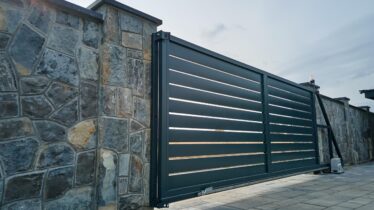
Swing gates operate via hinges attached to the gate posts. Rather than sliding, they open by pivoting, like a large door. This system is usually chosen when there is sufficient space inside or outside the entrance to accommodate the swing arc.
Visually, it is a very classic solution, which is why it remains popular in many residential projects. Sliding gates, on the other hand, move sideways and are usually preferred when space in front of the gate is limited or when the terrain makes opening the gate leaves impractical.
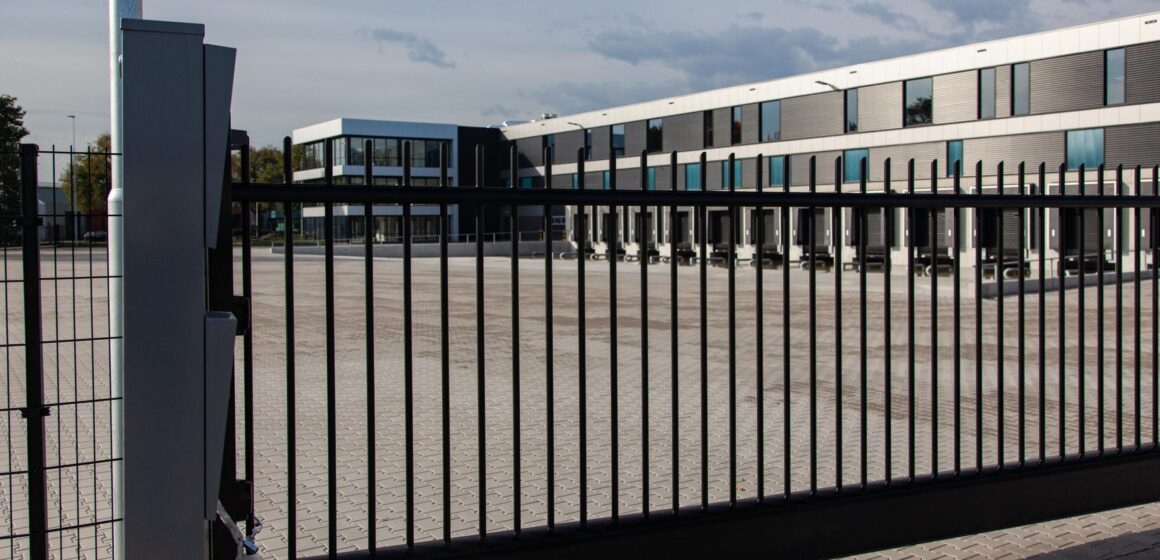
Sliding gate mechanisms are particularly useful in locations where swing gates are not the best option within a full access control system and gate automation setup. In this type of system, the sliding gate motor works to move the gate along a track or equivalent mechanism, ensuring efficient opening and saving space. This means that the choice between swing gates and sliding gates is not merely aesthetic.
It directly influences the type of gate mechanism, installation, maintenance and even how safety devices will be positioned. At wide entrances, on ramps or in areas with lateral restrictions, the appropriate solution can vary significantly. Therefore, a good design always begins by assessing the actual space and the expected usage flow.
Types of Gate Motors and How They Move the Gate
There are various types of gate motors used in gate automation, each offering specific advantages depending on the application. For swing gates, hydraulic rams remain a widely used solution where strength and durability are required, particularly for heavy gates. These systems use hydraulic fluid to generate consistent movement and are valued for their reliability and ability to handle demanding conditions over time.
Another common option is articulated arm motors. As the name suggests, these systems use a hinged arm to move the gate leaf and are especially useful where there are large pillars or layouts that make other operators difficult to install. They provide greater flexibility and are often well suited to residential entrances with spatial constraints.
Underground motors are also used in certain installations, particularly where aesthetics are a priority. Installed below ground level, they offer a discreet solution, although they typically require more complex installation and drainage considerations.
Threaded shaft gate motors are another alternative, converting rotational movement into linear motion. By turning a threaded shaft, these systems move the gate in a controlled and precise manner, making them suitable for lighter gates or applications requiring straightforward automation.
Ultimately, the electric motor is the core component that drives the entire system. The choice of motor should always be based on the weight of the gate, frequency of use, available space and the type of opening required, ensuring reliable performance and long-term efficiency.
Safety Features: What Prevents Accidents
In the UK, this is not a matter to be treated as a mere formality. The HSE makes it clear that powered gates are considered machinery and must be properly designed, manufactured, installed and maintained to prevent serious, even fatal, injuries. The authority also emphasises that risk assessment is a fundamental part of the design process and that the system must remain safe over time through regular inspection and maintenance.
This means that safety features are not simply included to meet requirements—they are integral to how automated gates and gate automation systems operate. Key features include infrared photocells, safety sensors, force limitation and rubber safety edges. These systems work together to detect obstacles and ensure that the gate responds immediately if a person, vehicle or object is in its path.
Photocells create an invisible beam across the gate opening. If this beam is interrupted during operation, the system can stop or prevent the gate from closing. In most installations, two photocells are used to form a monitored safety zone, improving detection reliability.
Safety edges, typically installed on the leading edges and other high-risk areas, provide an additional layer of protection. When contact is detected, rubber safety edges trigger the gate to stop and reverse, helping to prevent accidents such as crushing or entrapment.
The HSE also highlights risks including impact with the gate leaf, crushing against fixed structures, entrapment between moving parts, contact with mechanical components, and damage caused by environmental factors such as water ingress or extreme weather conditions.
Ultimately, the safe operation of an automated gate does not depend solely on the motor, but on how effectively the entire system responds to real-world conditions. In this way, electric gates not only control access, but also play a key role in enhancing security while protecting users from potential hazards.
What Happens During Power Outages
A common question is whether automatic gates will continue to operate during a power cut. The answer depends on the system configuration. Some automatic gates are equipped with a backup battery, allowing the system to maintain basic functionality for a limited period. However, the most important consideration is ensuring that there is a safe manual override in case of a power failure or technical malfunction.
A properly installed electric gate should never leave users stranded or without access. Most systems are designed with manual release mechanisms that allow the gate to be disengaged from the motor and operated safely by hand when needed.
The HSE also emphasises that users must understand how to place the system into a safe condition or isolate it immediately in the event of an emergency or failure. This ensures that the gate can be controlled safely even when automated functions are not available.
From a user perspective, these safety measures provide reassurance that a power outage is a manageable situation rather than a serious disruption, maintaining both security and accessibility at all times.
The Automation of Existing Gates
Many people assume that gate automation is only possible with a new gate, but this is not always the case. In many instances, existing gates can be automated, provided the structure is in good condition and the project is carried out correctly.
The same requirements apply to converting manual gates to motorised operation. In other words, converting a manual gate to an electric one still requires a risk assessment, appropriate documentation and a competent installation. This point is important because there is a difference between simply installing a motor and creating a truly safe system.
The success of automation depends on the whole package: foundations, fixings, alignment, protection of crush zones, sensors, controller behaviour and future maintenance. This is precisely why choosing an experienced installer makes such a difference.
Maintenance and Repair: Keeping Your Electric Gate Running Smoothly
To ensure electric gates operate safely and efficiently over time, regular maintenance is essential. Routine inspections help prevent faults, reduce the risk of accidents, and extend the lifespan of the entire gate system. Key maintenance tasks typically include lubricating moving parts, inspecting the electric gate motor, checking the control panel within the gate automation system, and testing all safety devices, such as safety edges and sensors.
It is also important to inspect gate panels and gate posts for signs of wear, corrosion, damage, or water ingress, all of which can affect both performance and security. The wider electronic system should be checked regularly to ensure all components are functioning correctly and that the automation system responds reliably under normal operating conditions.
Most automatic gates benefit from professional servicing at least once a year, although installations in high-traffic or exposed environments may require more frequent maintenance. Identifying and addressing issues early—such as motor faults, worn safety edges, or control panel errors—helps prevent more serious failures and reduces system downtime.
Regular maintenance and timely repairs ensure that the system continues to deliver secure and reliable access control. Proper servicing also protects the long-term performance of the system and maintains compliance with safety expectations for automated gate installations.
Why Choose URSA Gates
URSA Gates is an installation company with over 25 years’ experience in automated access systems for vehicles and pedestrians, operating throughout the UK and the Republic of Ireland. The company excels in engineering, end-to-end project management, serving both commercial and domestic clients, offering a 12-month warranty on installations and providing maintenance contracts.
An electric gate is not just a product; it is a combination of a motor, structure, control panel, access control, security and installation in a real-world environment. When this system is well thought out from design through to completion, the result is usually more reliable, safer and longer-lasting.
Summary
Electric gates and modern gate automation systems operate via a process that is relatively simple to understand, yet technically highly coordinated. A signal sent by a remote control, keypad, reader or intercom reaches the access control system, passes through the control panel, activates the electric gate motor and moves the gate according to the defined logic.
At the same time, sensors, limit switches and other safety devices monitor the operation to prevent faults and reduce risks. In the UK, the operation of an automated system cannot be separated from safety.
The HSE treats powered gates as machinery that must be correctly designed, installed and maintained. Therefore, the best system is not simply the one that opens quickly or looks the most modern, but the one that combines efficient access, genuine safety, competent installation and ongoing maintenance.